How to Password Protect a Website Made with Claude
Claude can create a website, but Claude does not automatically decide how that website is protected. Access depends on the publishing method. A public Claude Artifact has no simple shared-password gate, while exported HTML, CSS, and JavaScript can be hosted behind real access control.
For a client-only site, ask Claude for browser-ready files and publish those files through Revdoku with a password or verified-email login.
Choose the right publishing path
| Claude output | Native password? | Recommended use |
|---|---|---|
| Draft code in a chat | Not publicly hosted | Development |
| Public Claude Artifact | No shared password | Open demos |
| Team or organization Artifact sharing | Identity-based where supported | Internal work |
| Exported website on a protected host | Yes | Client review and delivery |
If you publish through Claude Artifacts, read Claude Artifacts vs Revdoku and review the current Publish dialog. Public Artifact pages may be available to anyone online and can appear in search.
Ask Claude for a clean website export
A useful request is:
Create a browser-ready static website folder. Include index.html and all required CSS, JavaScript, images, and assets. Use relative paths. Do not include API keys, secrets, private prompts, or customer data. Add a short README that explains how to open and test the site locally.Before publishing:
- Open the exported
index.htmllocally. - Click every navigation link and button.
- Check mobile and desktop layouts.
- Search the files for tokens, passwords, email addresses, and private notes.
- Remove sample data that should not reach a client.
- Confirm that any form or API feature has an appropriate backend.
A static export cannot safely contain secret API keys. Anything shipped to the browser should be treated as visible to the visitor after access is granted.
Publish the Claude-made site with Revdoku
- Put the final website files in one folder.
- Upload the folder or ZIP to Revdoku.
- Choose Password for a shared secret or Verified email for identity-based access.
- Optionally allow only named email addresses or approved domains.
- Publish and open the link in a private browser window.
- Confirm the access gate appears before the website or downloads.
- Share the protected link with the client.
Revdoku hosts the exported website. It does not place a password in front of an existing public Claude URL.
You can receive visitor notifications and review page, click, and download activity. When Claude creates a revision, replace the files behind the same Revdoku URL. The client keeps one stable address while the content changes.
For a general walkthrough, see How to password protect a website.
Password or verified email?
A password is quick when several trusted reviewers can share one secret. Verified email is better when you need to know which approved person entered. An allowlist can limit access to specific addresses or company domains.
Neither method prevents an authorized viewer from taking a screenshot or copying content. Access control limits entry; it does not create digital rights management.
Do not embed a fake password in the code
A JavaScript form that compares a password in the browser is not secure. The password or protected content may be visible in the page source or network requests. The host must check access before serving the private files.
Bottom line
Use Claude to build the website and use the host to control access. For a public marketing page, ordinary hosting may be enough. For client work, publish the exported Claude files through Revdoku to add a password, verified-email login, allowlists, activity tracking, and stable updates.
Just ask to “publish to Revdoku” to publish your as a fast and secure website
from your Codex, Claude or another AI apppublish files or folders
Paste this into your AI app.
Install the Revdoku skill in your AI app.
npx skills add revdoku/revdoku --skill revdoku -gChoose your AI app to connect through MCP.
codex mcp add revdoku --url https://app.revdoku.com/mcp
codex mcp login revdoku
claude mcp add --transport http revdoku https://app.revdoku.com/mcp
claude mcp login revdoku
https://app.revdoku.com/mcpFree · Public or protected · Visitor analytics · Forms and email alerts Building websites for clients? Explore Revdoku for agencies
History
- August 7, 2026 — Published by Revdoku Content Team
- August 1, 2026 — Reviewed by Eugene Mi
- September 5, 2026 — Last updated by Revdoku Content Team.
Related Articles
How to Migrate a Grok Build Website to Revdoku
Safely migrate a Grok Build website from grok.me to Revdoku using a direct transfer or ZIP, then test routing, assets, and access.
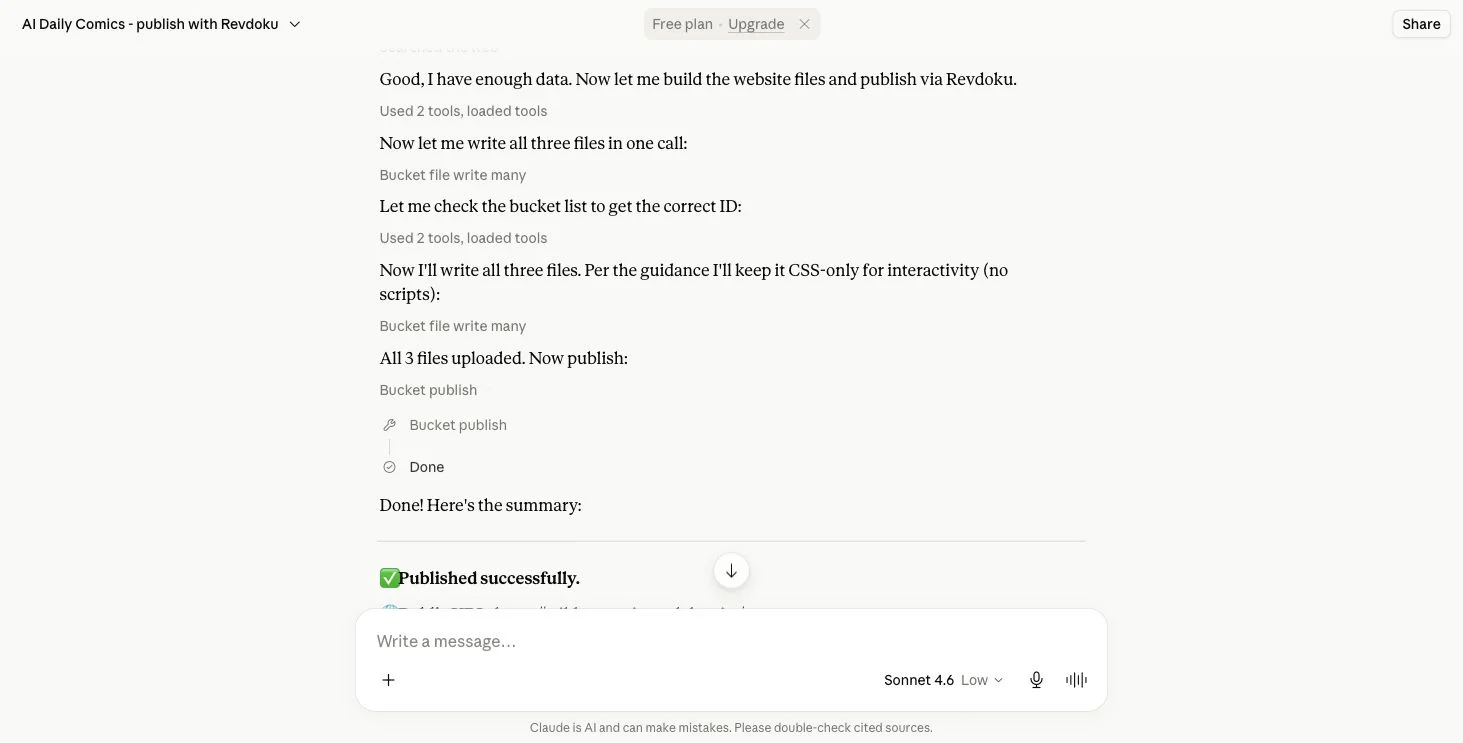
How to Migrate a Claude Artifact to Revdoku
Learn how to export, transfer, test, and securely publish a Claude Artifact as a static website on Revdoku.
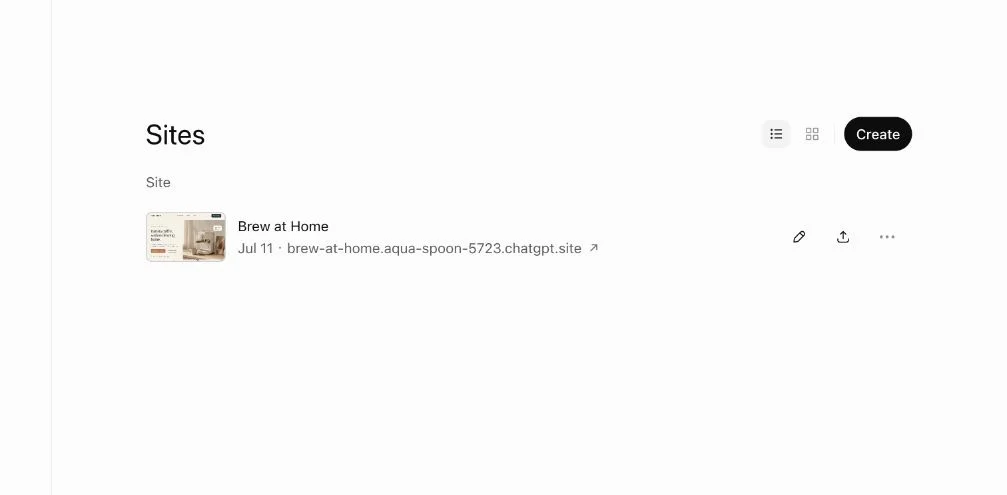
How to Export ChatGPT Sites and Move Your Files
Learn how to export a ChatGPT Site, verify every file, move it to Revdoku or another static host, test the preview, and retire the original.